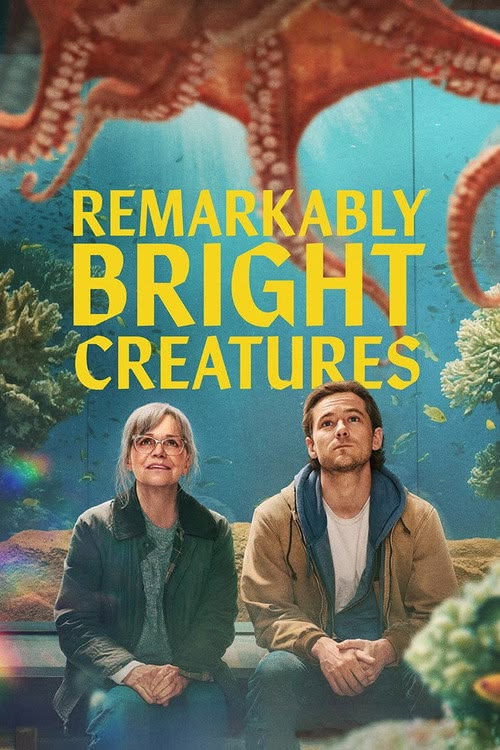
Disclaimer: This is going to be a rant article about Remarkably Bright Creatures and the long-standing debate over whether book adaptations can ever truly capture the essence of the stories they’re based on.
In order to keep up with the internet, especially the corner of Bookstagram that seems to have collectively fallen in love with Remarkably Bright Creatures by Shelby Van Pelt I finally picked up the book. If you’ve read it, you know exactly what I’m talking about. And if you’re an avid reader like I am, you also know how important it is for a beloved book to maintain its integrity when adapted for the screen.
Like many people who boarded the train a little late, I devoured the book in a matter of days, just in time for the movie release. It’s safe to say that I cried at the end. I was sitting on the edge of my bed, absolutely bawling, thinking about Marcellus and Tova and everything their story had come to mean. So naturally, the very next night, with the book still fresh in my mind, I sat down to watch the movie.
And that’s where things went downhill.
In my opinion, if a book is too expansive to be condensed into a feature-length film, then maybe it shouldn’t be. The adaptation lacked the emotional depth that made the book so special. The budding friendship between Marcellus and Tova, the misunderstandings between Cameron and Avery, Cameron’s struggle to leave his old life behind and so much of what made the story resonate simply wasn’t there.
My first red flag appeared within the opening minutes. The movie abruptly begins with Cameron travelling to Sowell Bay in a caravan. Anyone who has read the book knows that how he gets that caravan is an entirely different story, one that reveals much more about his character and circumstances. It may seem like a small change, but those details matter.
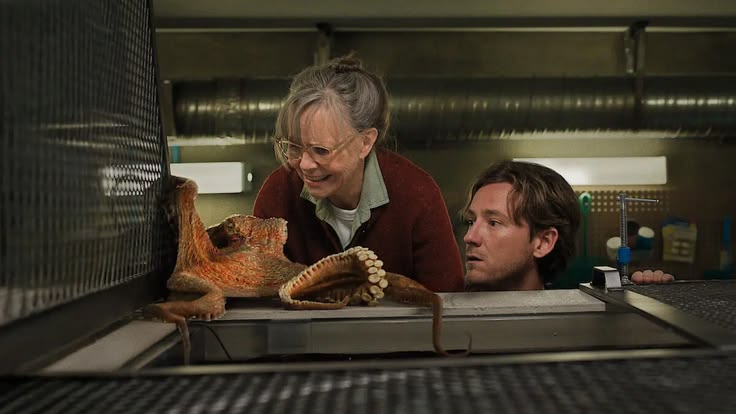
Throughout the film, there are countless moments that differ significantly from the book. Marcellus’ role in guiding Tova toward Cameron is heavily reduced. The driver’s licence incident, Marcellus’ tank-escaping adventures, and perhaps most importantly, his inner monologues, all of which gave the novel so much charm and personality are either altered or absent altogether.
One of the most frustrating changes comes in the revelation of Cameron’s connection to Tova. In the book, the sequence of events unfolds with careful logic and emotional payoff. In the movie, however, Tova thanks Marcellus for leading her to Cameron a line lifted directly from the novel and yet somehow discovers the truth about her relationship to Cameron only after she lets Marcellus go. The emotional weight is still trying to mimic the book, but the storytelling no longer supports it.
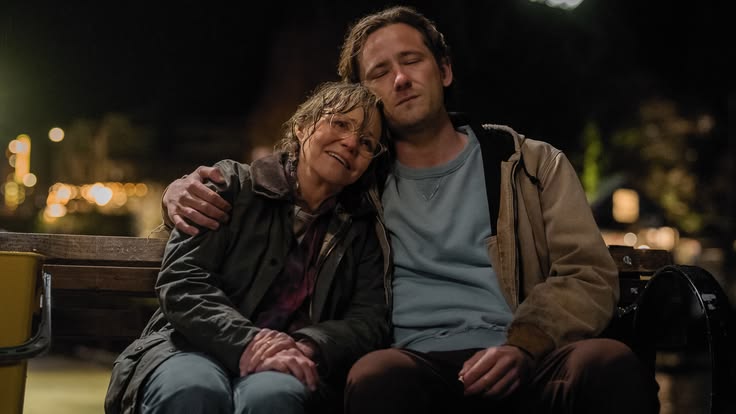
By the end of the 90-minute runtime, I wasn’t just disappointed, I was genuinely confused. How had such a beautiful, emotionally rich book been transformed into something so mediocre?
The novel takes readers on an emotional journey, allowing us to live alongside these characters and become invested in their lives. The movie, on the other hand, felt like a checklist of key scenes rather than a complete story. It touched on moments that mattered without ever understanding why they mattered. The result was an adaptation that felt rushed, as though hundreds of pages of emotional development had been aggressively trimmed down simply to fit a 90-minute runtime.
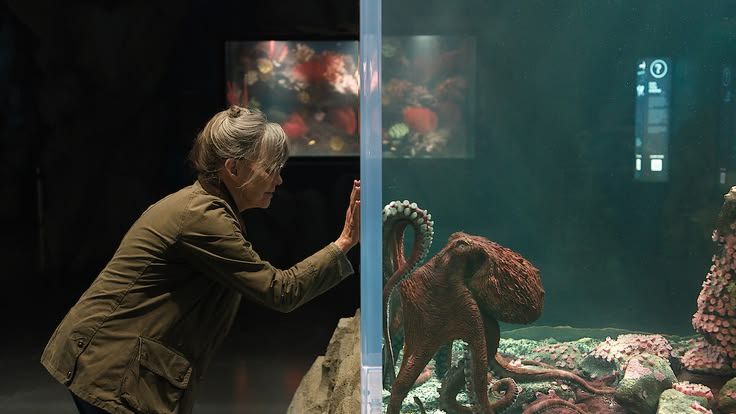
Don’t get me wrong, I love book adaptations when they’re done well. Take Off Campus, for example. The chemistry, the dialogue, the character dynamics, everything felt authentic to the book. But that’s also because it was adapted into a series rather than squeezed into a single film. The format gave the story room to breathe.
And maybe that’s the real issue. Some stories simply need time. They need space to develop relationships, explore motivations, and allow audiences to connect with the characters. When adaptations sacrifice those elements in favour of fitting a runtime, they risk losing the very thing that made readers fall in love with the story in the first place.
So, are book adaptations actually capturing the true essence of the books they adapt? Sometimes, yes.
But Remarkably Bright Creatures left me wondering whether some books are better left exactly where they belong: on the page.
Until next time!
Image credits: Pinterest